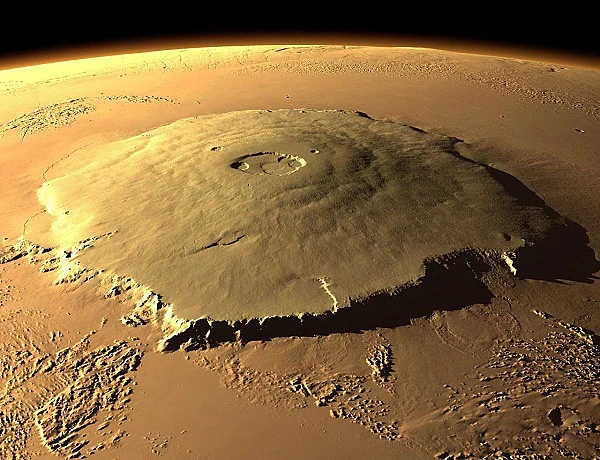
The largest of the volcanoes in the Tharsis Montes region, as well as all known volcanoes in the solar system, is Olympus Mons. Olympus Mons is a shield volcano 624 km (374 mi) in diameter (approximately the same size as the state of Arizona), 25 km (16 mi) high, and is rimmed by a 6 km (4 mi) high scarp. A caldera 80 km (50 mi) wide is located at the summit of Olympus Mons. To compare, the largest volcano on Earth is Mauna Loa. Mauna Loa is a shield volcano 10 km (6.3 mi) high and 120 km (75 mi) across. The volume of Olympus Mons is about 100 times larger than that of Mauna Loa. In fact, the entire chain of Hawaiian islands (from Kauai to Hawaii) would fit inside Olympus Mons!
Why is Olympus Mons so big?
The main difference between the volcanoes on Mars and Earth is their size; volcanoes in the Tharsis region of Mars are 10 to 100 times larger than those anywhere on Earth. The lava flows on the Martian surface are observed to be much longer, probably a result of higher eruption rates and lower surface gravity. Another reason why the volcanoes on Mars are so massive is because the crust on Mars doesn't move the way it does on Earth. On Earth, the hot spots remain stationary but crustal plates are moving above them. The Hawaiian islands result from the northwesterly movement of the Pacific plate over a stationary hotspot producing lava. As the plate moves over the hotspot, new volcanoes are formed and the existing ones become extinct. This distributes the total volume of lava among many volcanoes rather than one large volcano. On Mars, the crust remains stationary and the lava piles up in one, very large volcano.
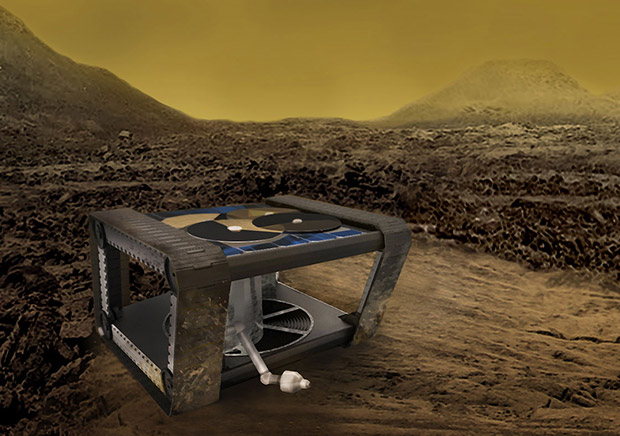
Has a spacecraft ever landed on Venus?
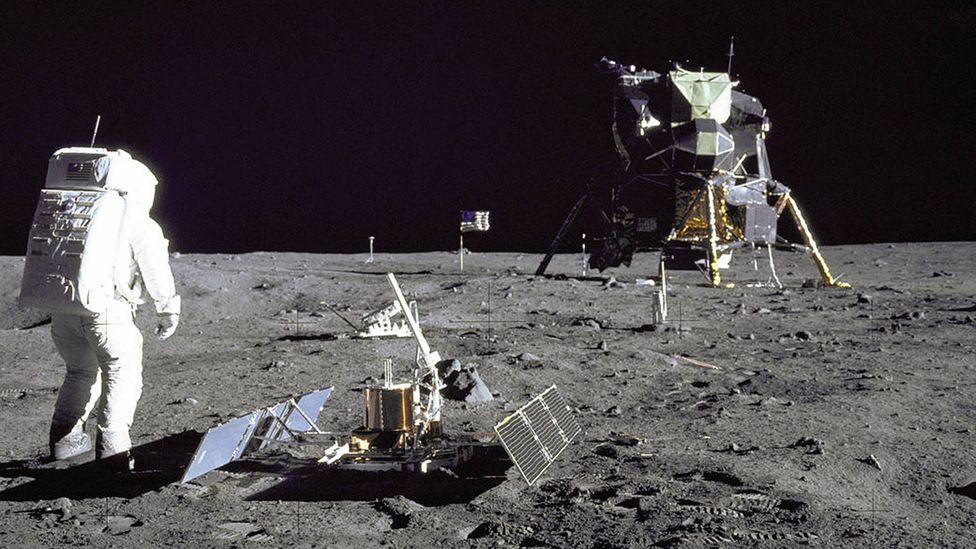
Apollo program, also known as Project Apollo, was the third United States human spaceflight program carried out by the National Aeronautics and Space Administration (NASA), which succeeded in preparing and landing the first humans on the Moon from 1968 to 1972. It was first conceived in 1960 during President Dwight D. Eisenhower's administration as a three-person spacecraft to follow the one-person Project Mercury, which put the first Americans in space. Apollo was later dedicated to President John F. Kennedy's national goal for the 1960s of "landing a man on the Moon and returning him safely to the Earth" in an address to Congress on May 25, 1961. It was the third US human spaceflight program to fly, preceded by the two-person Project Gemini conceived in 1961 to extend spaceflight capability in support of Apollo. Kennedy's goal was accomplished on the Apollo 11 mission when astronauts Neil Armstrong and Buzz Aldrin landed their Apollo Lunar Module (LM) on July 20, 1969, and walked on the lunar surface, while Michael Collins remained in lunar orbit in the command and service module (CSM), and all three landed safely on Earth in the Pacific Ocean on July 24. Five subsequent Apollo missions also landed astronauts on the Moon, the last, Apollo 17, in December 1972. In these six spaceflights, twelve people walked on the Moon.
The "Great Red Spot" is a massive and persistent anticyclonic storm on the planet Jupiter. It is one of the most iconic features of the planet and is known for its reddish coloration, although its exact hue can vary over time. Here are some key facts about the Great Red Spot: Size: The Great Red Spot is significantly larger than Earth, with a diameter that has been measured to be about 16,350 kilometers (10,159 miles), making it approximately 1.3 times the diameter of our planet. Duration: The storm has been observed for more than 350 years, with the earliest known records dating back to the 17th century. It is considered a long-lasting atmospheric phenomenon. Composition: The reddish color of the Great Red Spot is thought to be caused by complex organic molecules and compounds in Jupiter's atmosphere, which are altered by ultraviolet light from the Sun. Rotation: The storm rotates counterclockwise in Jupiter's southern hemisphere, completing a full rotation approximately every six Earth days. This is in contrast to hurricanes on Earth, which typically rotate clockwise in the southern hemisphere. Changeable Size: While historically the Great Red Spot has been shrinking, its size can vary over time due to complex interactions in Jupiter's atmosphere. Observations from spacecraft like NASA's Juno mission continue to monitor its evolution. Weather Phenomenon: The Great Red Spot is essentially a giant storm system, with high-pressure at its center and lower pressures at its edges. It generates strong winds and turbulence within Jupiter's atmosphere. Scientific Study: Scientists study the Great Red Spot to better understand the dynamics of Jupiter's atmosphere and its weather patterns. It provides valuable insights into the complex processes occurring in the gas giant.
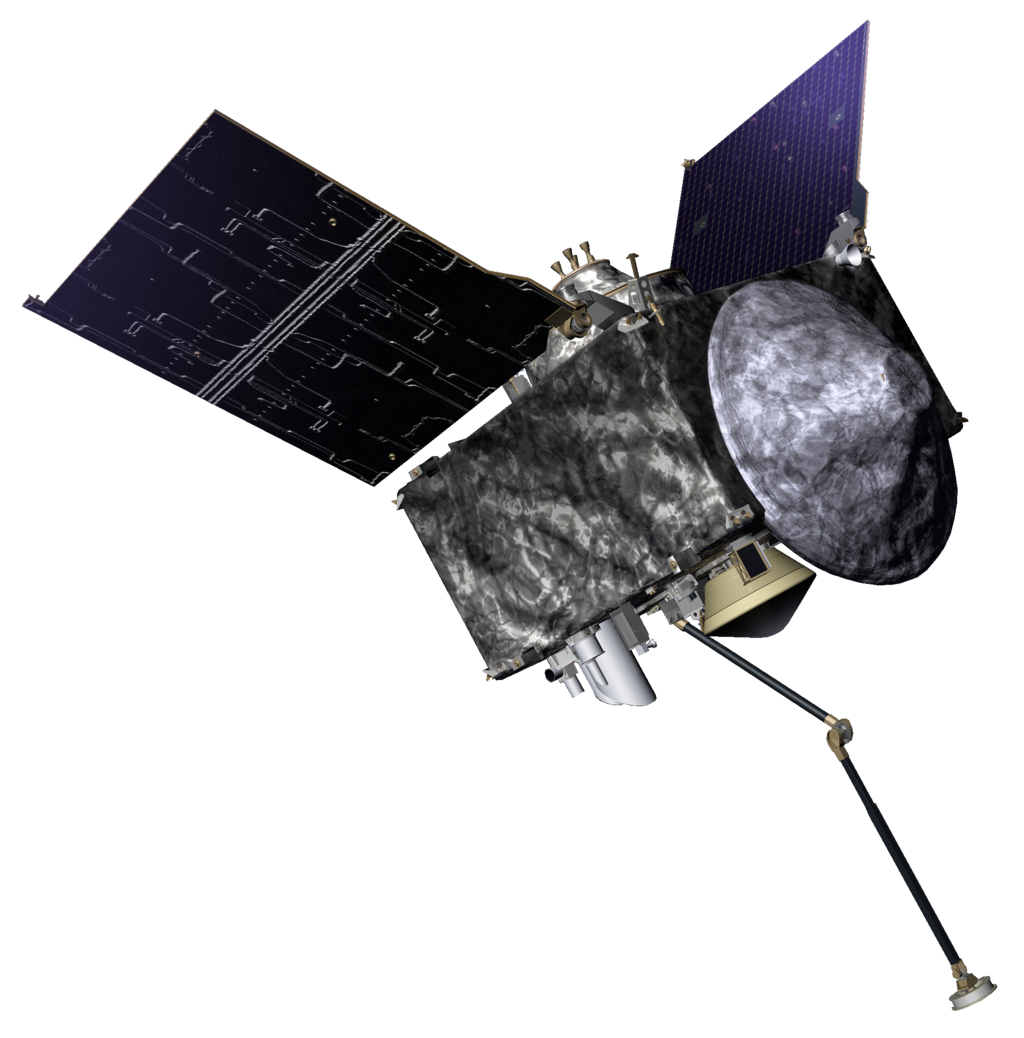
The OSIRIS-REx spacecraft is traveling to Bennu, a carbonaceous asteroid whose regolith may record the earliest history of our solar system. Bennu may contain the molecular precursors to the origin of life and the Earth’s oceans. Bennu is also one of the most potentially hazardous asteroids, as it has a relatively high probability of impacting the Earth late in the 22nd century. OSIRIS-REx will determine Bennu’s physical and chemical properties, which will be critical to know in the event of an impact mitigation mission. Finally, asteroids like Bennu contain natural resources such as water, organics, and precious metals. In the future, these asteroids may one day fuel the exploration of the solar system by robotic and crewed spacecraft.
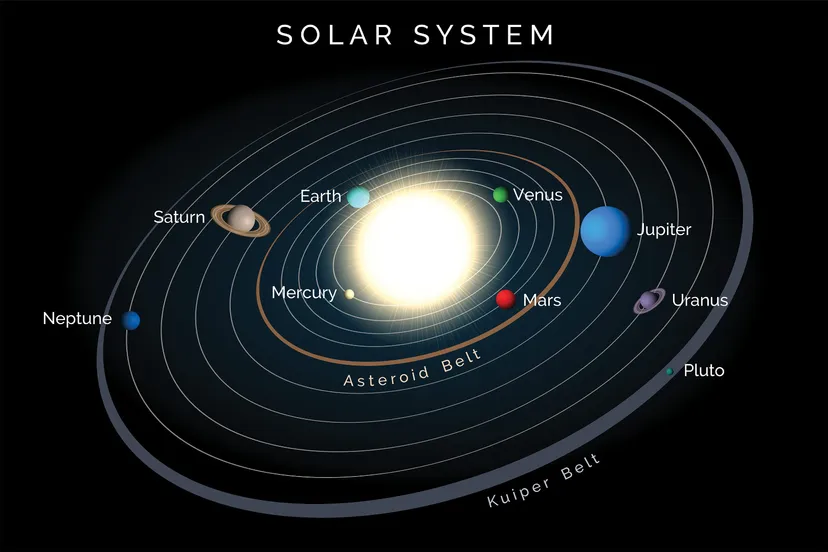
The main difference between the Kuiper Belt and the Asteriod belt is that the Kuiper belt is much larger in size and more massive (that is, it has more objects) and the objects in the Kuiper Belt are composed largely of various ices compared to the silicates (rocks) and metals of the Asteroid Belt. Besides… The several differences between the asteroid belt and the Kuiper Belt: Distance: this is the most obvious one, the asteroid belt is located between the orbits of Mars and Jupiter (so between 249 million and 740 million km from the Sun) whilst the kuiper belt stretched from 30 to 55 AU or around 4.5 billion km to 8.2 billion km. Size: the kuiper belt is estimated to be around 20x as wide and 200x as massive as the asteroid belt. The asteroid belt itself is estimated be be about 4% the mass of the moon. Temperature: the kuiper belt, being beyond the orbit of Neptune, is very frigid in temperature being only about 50 degrees above absolute zero (-223 °C). The asteroid belt itself is around -73 °C and -108 °C.